A note on variance.
a letter from the studio
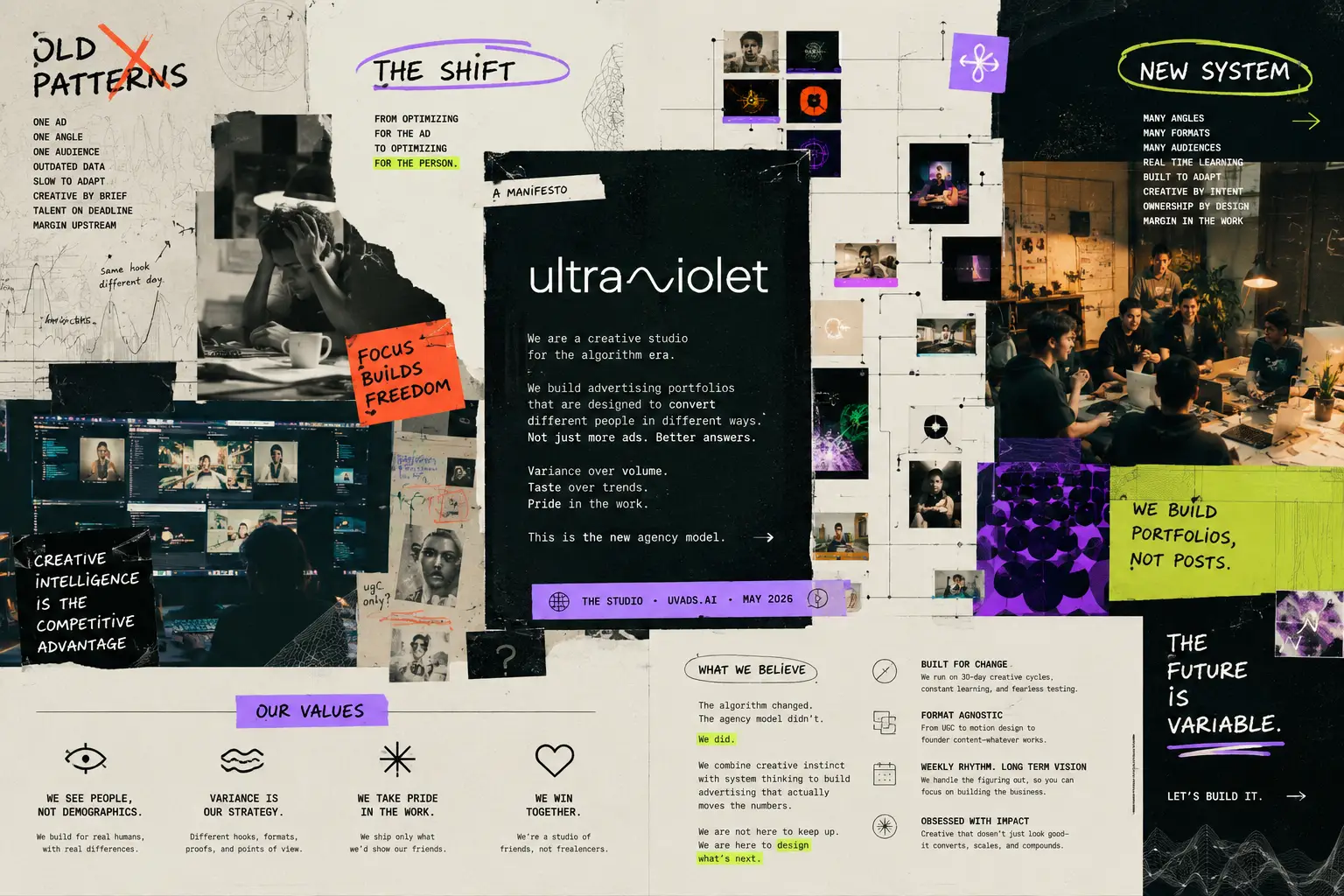
The algorithm changed. The agency model didn't.
In late 2024, Meta shipped Andromeda. The optimization target stopped being the winning ad and started being the variance between ads. The system stopped asking which creative converts. It started asking which creative converts whom.
 Andromeda
Most agencies have not adjusted. They are still selling a single ad type, usually UGC, on a four-week cadence, to a buyer who is by now three algorithm cycles behind.
This is a letter about that. It is also a letter about why we built , and why we did it the way we did.
-
Variance, not volume.
Andromeda does not reward more ads. It rewards different ads. Different hooks, different formats, different proof beats, different visual languages.
A single hero unit with four near-duplicates around it is one ad in five wrappers. Thirty videos that share a thesis and differ on everything else is a portfolio. We ship the portfolio, every thirty days.
Volume without variance is slop. Variance without taste is noise.
-
UGC is not the whole answer.
Most agencies sell UGC because UGC is the format they know how to ship. The buyer can tell. The viewer can tell. The algorithm can tell.
A real portfolio mixes UGC with educational explainers, founder-to-camera, voiceover demo, side-by-side comparison, narrative, motion design, screen-record, and a half-dozen other formats no one has named yet. Each one converts a different person.
The point is never more UGC. The point is the right format meeting the right viewer.
-
Hire people who want to be proud of the work.
The agency norm is talent on a brief, on a deadline, on a thin paycheck, with the margin sitting upstream. The work shows it.
We hire the opposite. People who would not put their name on something they would not show their friends. People who care whether the cut is good. People for whom finishing the ad is its own satisfaction.
Every project gets that attention because we will not ship work we do not want to claim.
-
We know what running this is like.
Running an e-commerce operation is mostly numbers, deadlines, and compliance. The mental load is real. Most weeks, the last thing you can give clean attention to is sitting down and trying to imagine what a new customer needs to see before they will hand over a credit card.
That is the job we take off your desk. Not the strategy: you still own that. The week-after-week creative figuring-out. What works now, what stopped working, what to test next, what to ship Friday.
You should be able to think about the rest of the business.
-
We do this because we love it.
Plainly. The work is satisfying. Watching a piece of creative move a real number is one of the few feedback loops in marketing that actually closes. We chose this because we want to spend our years inside it.
The landscape is brutal and getting more so. The brands that win the next five years will be the ones whose creative is unrecognizable from quarter to quarter, and whose partners care about that creative the way a studio cares about a film.
That is the studio we are building. If you have been pushing your head against the wall trying to figure out what your customer needs to see before they buy, you are exactly the person this is for.